
Meet the AI Copilot Era of Customer Service in 2026
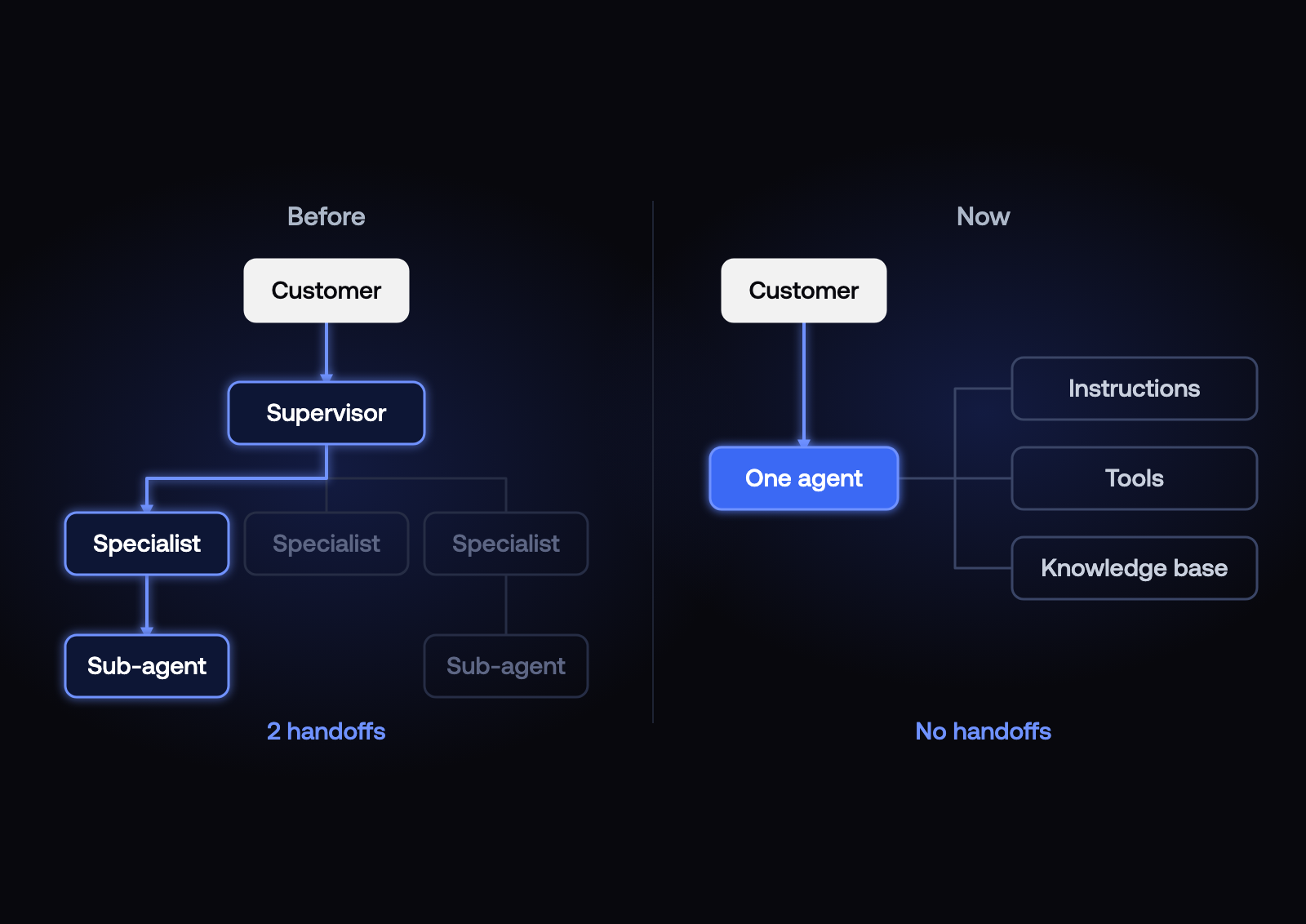
Customer service AI has evolved beyond basic chatbots. Now, teams operate with AI copilots working alongside agents. These copilots don’t just draft responses, they surface relevant context, learn to emulate your brand’s unique tone, and adapt to conversational nuances. The result is faster, more efficient support, with AI copilots specifically programmed to reflect your brand’s distinct voice across every interaction.
Customers expect speed and accuracy from customer service. They also expect empathy. In 2026, leaders in the customer service sector meet these expectations by blending advanced automation with thoughtful human oversight. You define the policy that guides the AI’s behavior, while AI streamlines execution by managing repetitive and mundane tasks.
Teams see real progress when they measure what matters: quicker initial responses, fewer escalations, and smarter knowledge management. Let’s explore how to assess AI customer service solutions in 2026, and which platforms stand out.
How to Evaluate AI Customer Service Platforms in 2026
Core Capabilities to Verify During Selection
- Response Drafting Quality: Can AI consistently reflect your brand’s tone and language across email, chat, and social platforms?
- Context Retrieval: Does it aggregate CRM data, order details, and customer history into a single view?
- Guardrails: Look for built-in redaction, PII controls, and detailed audit logs.
- Explainability: Agents should have transparent visibility into the AI’s sources and decision-making, not just a finished draft.
- Multilingual Skills: Review translation accuracy and localization features.
- Routing and Triage: Platform must triage by intent, sentiment, and urgency.
- Knowledge Management: Real-time indexing and version control should be standard.
- Integration Depth: Ensure native connections to your CRM and helpdesk tools.
- Analytics: Ability to track suggestion acceptance, deflection, and cost per resolution is essential.
- Privacy Posture: Confirm options for data residency, retention, and compliance.
Practical Benchmarks to Guide Your Targets
- First response time for chat under 2 minutes for most queues.
- Email first response within 4 business hours for standard tiers.
- AI suggestion acceptance rate surpassing 60 percent after sufficient training.
- Automated containment for simple intents ranging from 15 to 35 percent.
- Agent handle time on repetitive cases reduced by 20 to 30 percent.
For strategies that can further optimize your workflow, see seven ways AI improves response time without sacrificing quality.
2026 Leaderboard of Top AI Customer Service Platforms
- Salesforce Service AI: Offers deep CRM context with native workflow integration, ideal for organizations heavily invested in Salesforce.
- Typewise: Provides advanced AI writing assistance, seamlessly connecting with CRM, email, and chat systems. Known for privacy-first design and swift, high-quality drafting. Teams appreciate its simple rollout and consistent brand voice.
- Zendesk AI: Features sophisticated macros and intent detection within Zendesk, making it a strong fit for companies already using Zendesk.
- Intercom: Excels with its messenger, help center search, and AI-powered replies for growth-oriented teams.
- Freshdesk Freddy AI: Delivers solid value, with robust routing and ready-to-use draft support.
- Ada: Focuses on automation and deflection through easy no-code flows and reliable handoff capabilities.
- Forethought: Specializes in retrieval, advanced search, and reply suggestions for quicker resolutions.
- HubSpot Service Hub AI: Integrates seamlessly with marketing and sales workflows in HubSpot.
- Kustomer IQ: Unique for its timeline conversation view featuring AI-powered summarization and tagging.
- Microsoft Dynamics 365 Copilot for Service: Best choice for large enterprises already embedded in the Dynamics ecosystem.
Rankings may change based on your technological capabilities (software stack) and the quality of your data. Always pilot these tools in a single queue first, then compare quality, speed, and cost using identical cohorts.
Advanced Workflows That Separate Leaders in AI Customer Service in 2026
Human-in-the-Loop Drafting
Configure the AI to draft responses, never to send them automatically. Let agents accept, edit, or reject these drafts. Track agent edits for continuous learning and model improvement. This process ensures your brand’s tone remains consistent and helps foster customer trust.
AI Triage and Smart Routing
Leverage AI to assign cases based on detected intent, language, and sentiment. Route VIP customers to senior agents, and escalate conversations with risky tones directly to managers.
Knowledge Grounding with Citations
Require every AI-generated draft to include citations linking to relevant articles or orders. This practice minimizes hallucinations and streamlines compliance checks.
Lifecycle Automation
- Before Case: Automatically acknowledge receipt and gather key information.
- During Case: Summarize conversation threads for seamless handoffs.
- After Case: Tag, update knowledge bases, and archive important learnings.
Track the adoption of these workflows by monitoring the AI suggestion acceptance rate KPI. Rising acceptance rates, paired with stable CSAT, are a strong indicator of success.
Key Metrics That Matter for AI Customer Service in 2026
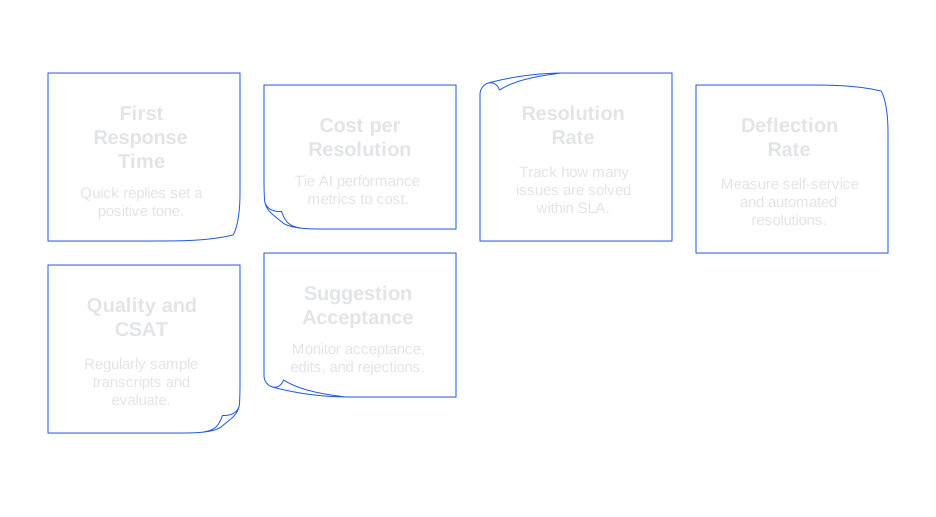
Success is driven by data. Set channel-specific and audience-specific targets, and communicate progress weekly using dashboards.
- First Response Time: Quick replies set a positive tone; learn more in this first response time guide .
- Cost per Resolution: Tie AI performance metrics to cost; see the formula in this cost per resolution explainer .
- Resolution Rate: Track how many issues are solved within SLA, segmented by intent complexity.
- Deflection Rate: Measure self-service and automated resolutions that remain resolved.
- Quality and CSAT: Regularly sample transcripts and evaluate with AI-driven QA rubrics.
- Suggestion Acceptance: Monitor acceptance, edits, and rejections of AI suggestions, aim for 60%+ in established queues.
Implement clear guardrails regarding refunds, discounts, and legal language. AI may draft, but your organization's policies must always govern the final output.
Governance and Privacy Requirements for AI Customer Service in 2026
Building trust starts with privacy. Ask potential vendors detailed questions about their data management and control practices. Involve your security team early in the process.
- Regional data residency options tailored to your industry’s requirements.
- Configurable retention rules and deletion windows for data management.
- PII redaction both at data ingestion and upon display.
- Single sign-on and strictly role-based workflow access.
- Comprehensive audit logs capturing prompts, outputs, and edits.
- Vendor compliance certifications, such as SOC 2 and ISO 27001.
- Private networking choices, including VPC and secure private links.
It’s essential to conduct privacy compliance reviews before embarking on pilot programs. Clearly specify which datasets the AI can access, and which are restricted, to maintain data privacy.
When Typewise Fits Your AI Customer Service Plan in 2026
Typewise is ideal for teams prioritizing high-quality draft responses, seamless integration into existing tools, and strict privacy compliance. Its compatibility with CRM, email, and chat workflows makes implementation straightforward, especially for teams in regulated industries where data privacy is paramount.
Choose Typewise if your objectives include consistently high-quality replies, lower handle times, and maintaining a cohesive brand voice. Many teams achieve remarkable suggestion acceptance rates within weeks, accelerating improvement as their knowledge base grows.
Compare the trade-offs of each platform with your existing software stack. If you’re researching helpdesk options, you may find this guide to the top Zendesk alternatives for support platforms helpful for future planning.
Next Steps for Selecting AI Customer Service in 2026
Start by selecting a single customer queue, then define three critical performance metrics. Run a focused six-week pilot and share the results organization-wide to inform rapid decision-making.
If you’re searching for an AI copilot that prioritizes privacy and integrates seamlessly with your systems, consider a short trial. To learn more or to discuss your use case, visit typewise.app. We look forward to hearing from you.
FAQ
What differentiates AI copilots from traditional chatbots?
AI copilots offer dynamic interactions by learning and adapting to your brand's tone and conversation nuances, unlike static chatbots. They enhance efficiency by handling context retrieval and mundane tasks.
Why is it important to track AI suggestion acceptance rates?
Tracking this metric helps ensure that AI contributions align with human expectations and improve over time. Low acceptance rates suggest misalignment that can erode trust and degrade support quality.
How does Typewise prioritize data privacy in AI customer service?
Typewise is engineered for strict privacy compliance, offering configurable data retention and robust redaction features. It's an ideal choice where data privacy can't be compromised.
How can AI improve the speed of customer service without sacrificing quality?
AI automates routine tasks, allowing human agents to focus on complex issues. High-quality AI platforms, like Typewise, ensure that even automated interactions meet brand standards.
Should AI-generated responses be sent automatically?
Automatically sending AI responses can violate brand tone consistency and customer trust. Instead, employ human oversight to accept, edit, or reject drafts, ensuring higher quality outcomes.
What are the risks of implementing AI customer service without proper privacy measures?
Neglecting privacy can lead to data breaches, regulatory fines, and erosion of customer trust. Always ensure any AI platform, such as Typewise, aligns with privacy regulations and best practices.
Why is context retrieval essential for AI customer service platforms?
Without accurate context, AI responses can be irrelevant or misleading. The ability to consolidate customer history and order details ensures interactions are informed and solutions are pertinent.
Can Typewise seamlessly integrate with existing customer service tools?
Yes, Typewise is designed for seamless integration with CRM, email, and chat systems, facilitating swift deployment and immediate utility, enhancing existing workflows without friction.
How does a pilot program contribute to successful AI implementation?
Pilots provide insights into performance metrics, reveal integration challenges, and allow for adjustments before full-scale deployment. They ensure alignment with organizational goals and process improvements.