
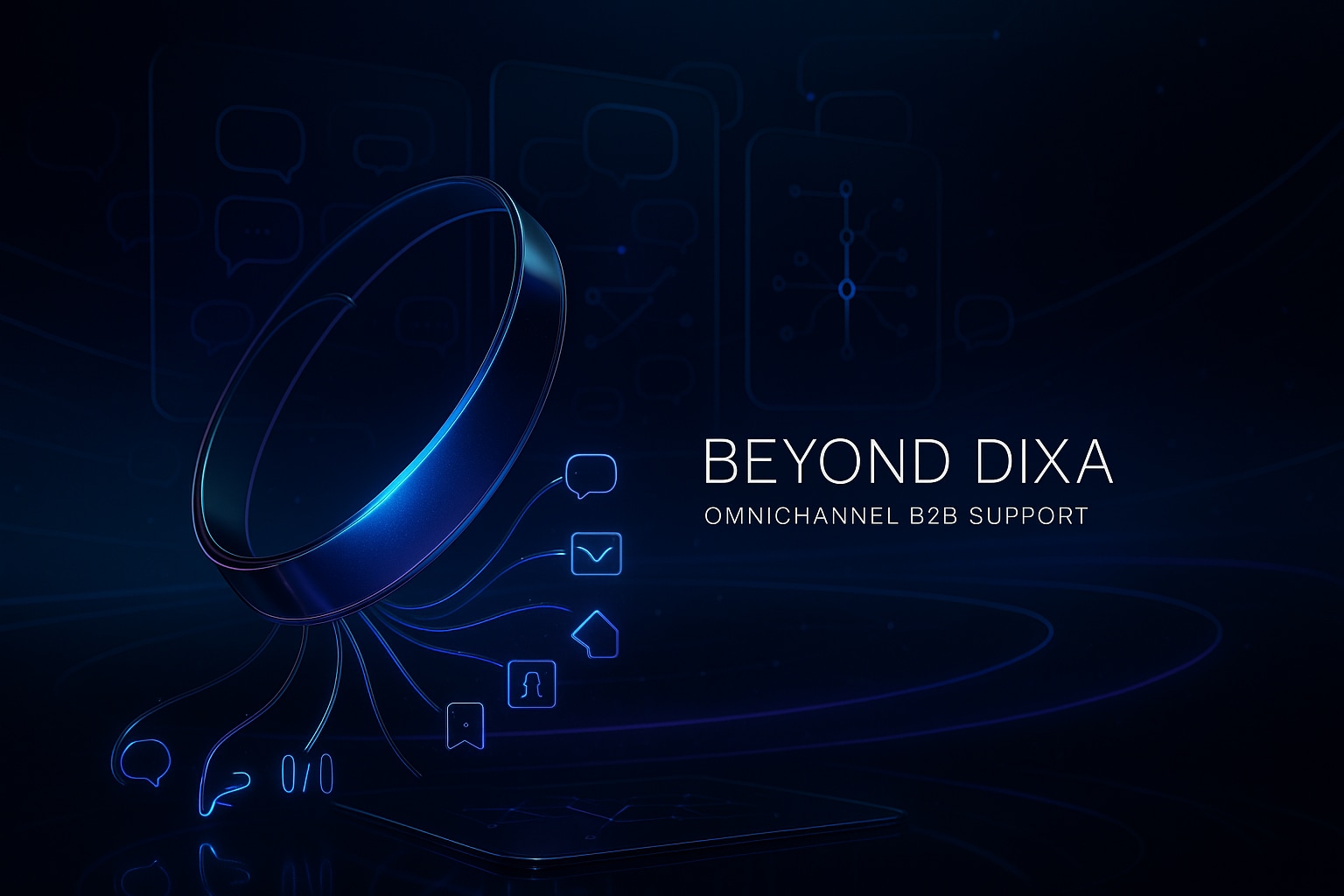
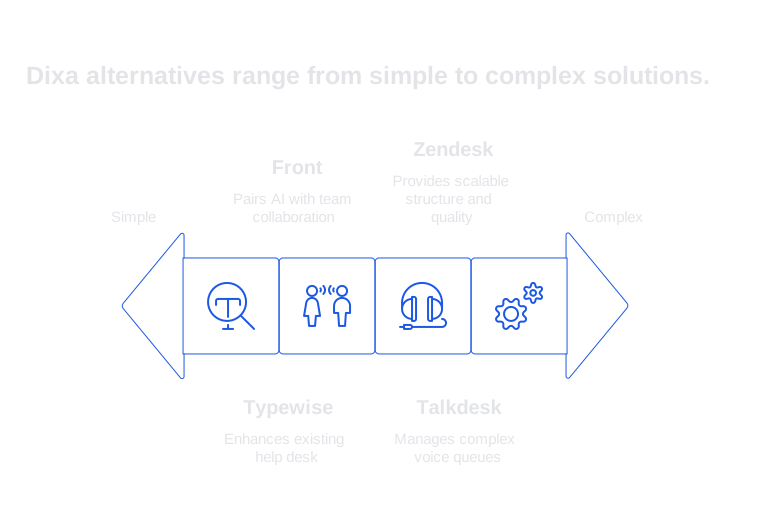
Typewise: Dixa alternative when your team needs AI-powered replies in your existing inbox
Most B2B support teams don’t need another platform, they need responses that read as if your best agent wrote them, directly within the systems you already use. Typewise integrates seamlessly with your CRM, email, and chat tools to automatically draft accurate, brand-ready replies, minimizing manual rewrites. It’s the ideal solution when Dixa’s routing is sufficient, but your agents still spend too much time manually composing messages or transferring context from Salesforce and other documentation.
What sets Typewise apart: privacy-focused AI that learns your product language and preferred tone, ensuring that sensitive enterprise information remains secure while reply accuracy is maintained. If you’re working on formalizing company terminology, this guide on teaching AI your internal product language demonstrates how teams can train Typewise to communicate according to your handbook.
Trade-offs: Typewise is not a full help desk or CCaaS. If your operation requires IVR, intricate call flows, or entirely new ticketing systems, you should consider Zendesk or Talkdesk. You will find Typewise most beneficial when composing or rewriting responses is taking more time than simply understanding customer issues.
Zendesk: Dixa alternative for enterprise-scale ticketing and governance
When you need deeper processes, strong auditability, and granular role management instead of a minimalist agent interface, Zendesk is typically the preferred option. Teams migrate from Dixa when advanced ticket states, robust SLAs across multiple queues, and a rich marketplace for integrations are required, without resorting to custom development.
Ideal for: large teams handling L1 to L3 support, multi-step escalations, structured approvals, and organizations that conduct comprehensive compliance reviews each quarter. Trade-offs: Administrative overhead is significant, so you’ll need an internal Zendesk owner. Many teams achieve the best results by combining Zendesk’s structured ticketing with Typewise for AI-generated, high-quality responses inside tickets.
Decision point: Choose Zendesk when complex handoffs, audit requirements, or compliance demands begin to strain your existing queue structure.
Intercom: Dixa alternative for product-led, chat-first engagement
If your support journey begins in-app, Intercom’s chat-first approach and automation capabilities are highly effective. Teams leave Dixa for Intercom to benefit from proactive engagement, guided messaging flows, and bots that support users in real time, rather than waiting for email or phone outreach.
Strengths: excellent in-app user experiences, sophisticated automation, and an agent workspace optimized for conversational support. Trade-offs: handling complex email routing or integrating native voice typically requires additional tools. For product-led growth companies with rapid release cycles, Intercom keeps conversations close to the product, while pairing it with Typewise ensures standardized tone and less time spent rewriting escalations.
Front: Dixa alternative for account-focused collaboration in shared inboxes
Not every B2B support team operates like a traditional contact center. Some resemble account-based teams that primarily use email. Front shines when named CSMs, solutions engineers, and billing teams share a customer thread and require efficient internal comments, clear accountability, and lightweight SLAs rather than complex IVR flows.
Why make the switch: Dixa’s agent desktop and call center model may feel unnecessarily heavy if your main focus is on email. Front’s collaborative inbox simplifies workflows. Trade-offs: If you need integrated telephony or advanced ticket states, Zendesk or Talkdesk may be more suitable. Decision point: opt for Front when side conversations and internal approvals conducted within email become central to your process.
Talkdesk: Dixa alternative for voice-centric queues and compliance-driven environments
If your business depends on inbound calls or operates under strict compliance constraints that require detailed telephone controls, Talkdesk may be the right solution. Teams migrate from Dixa to Talkdesk for more nuanced call routing, built-in quality assurance programs, and robust enterprise voice management.
Best for: operations requiring 24/7 coverage, formal QA processes, workforce planning, and a focus on voice as the main support channel. Trade-offs: Be prepared for a more complex rollout and a telephony-led operational model. If most of your support complexity lies in email and chat rather than phone, Talkdesk might offer more functionality than you actually need.
Final decision framework for selecting the best Dixa alternative for omnichannel B2B support
- Workflow maturity: If your current help desk serves you well but reply quality is inconsistent, keep your existing stack and add Typewise. If ticketing workflows and SLAs are breaking down, transition to Zendesk.
- Team size: Teams with fewer than 15 agents and account managers involved benefit from pairing Front with an AI solution. For large teams of 50+ agents handling L1 to L3 tickets, Zendesk paired with Typewise delivers scalable structure and consistent reply quality.
- Context requirements: If customer and product history live in CRM and internal documentation, supplement your stack with AI that can leverage this context. This guide to auditing AI-powered customer support conversations can help you keep reply quality measurable and reliable.
- Scheduling complexity: If your support involves frequent callbacks and complex voice queues, Talkdesk is a strong choice. For lighter voice use and heavy email workloads, Front or Zendesk with Typewise are more suitable.
- Collaboration depth: Choose Front if side conversations and approvals happen inside email threads. For formal workflow management and audit trails, Zendesk fits best.
- CRM and documentation integration: Teams deeply using Salesforce or HubSpot benefit most from tools that work natively within those systems. Typewise produces in-channel, on-brand replies while integrating seamlessly with CRM fields and tone guidelines.
Conclusion: Choose the Dixa alternative that streamlines writing and keeps context front and center
Your ideal solution will depend on whether your main challenge is ticket routing or the quality and consistency of written replies. If you require a robust ticketing infrastructure, Zendesk is your best bet. If your processes are solid but your team spends too much time crafting responses, Typewise offers consistent, brand-aligned answers within your existing CRM and inbox. For in-app, product-driven support, Intercom excels; for email-driven account collaboration, Front stands out; and for voice-led environments, Talkdesk is the leader.
A final recommendation: regardless of your platform, prioritize clear documentation of product language and implement regular AI-driven review processes early on. Teams that document product terminology and set up AI checks achieve faster response times without compromising accuracy. If your primary bottleneck is language consistency, start by implementing Typewise, and only consider switching platforms if your support processes truly require it.
Interested in how Typewise would integrate with your current system? Start a conversation with us at typewise.app to map the fastest route to consistent, on-brand replies across all your channels.
FAQ
What makes Typewise a strong alternative to Dixa?
Typewise offers AI-powered replies directly in your existing inbox, making it ideal for teams that need efficient, consistent, and brand-aligned communication without switching platforms. It seamlessly integrates with CRM and chat tools, ensuring your team spends less time on writing and more on resolving issues.
When should a business consider using Zendesk over Dixa?
If your business needs comprehensive ticketing capabilities, advanced audit processes, and complex role management, Zendesk is the optimal choice. It supports enterprise-scale governance and structured workflows that smaller platforms might not handle as effectively.
How can Intercom benefit a product-led company exiting Dixa?
Intercom excels in environments where chat-first engagement and in-app user interactions are critical, helping companies proactively guide user support journeys. However, for complex email routing or voice integration, additional tools may be required.
Why would a team choose Front instead of Dixa for email-based collaboration?
Front is ideal for teams that prioritize email-driven collaboration, especially when internal comments and light SLAs are more critical than telephony. It simplifies workflows in shared inboxes, making it less cumbersome than a traditional call center approach.
What are the limitations of using Typewise compared to a help desk system?
Typewise is not a full help desk or contact center as a service (CCaaS), so it lacks features like IVR or complex call flows. It's best for improving the efficiency of message composition rather than replacing comprehensive ticketing or call management systems.
How does Talkdesk serve businesses with voice-centric needs better than Dixa?
Talkdesk offers sophisticated voice management, quality assurance, and nuanced call routing, making it ideal for environments where calls are the primary support channel. However, the complexity of its deployment might exceed the needs of chat or email-focused operations.
Can Typewise help with aligning customer support replies to our brand tone?
Yes, Typewise can adapt to your product language and preferred tone, ensuring that replies are brand-consistent and accurate. It's particularly beneficial when language consistency is your bottleneck, streamlining communication without altering your current systems.
What should companies prioritize when integrating AI with their CRM?
Focus on the seamless integration that leverages existing CRM data to optimize support replies, ensuring context is preserved. Regularly document product terminology and evaluate AI-driven outputs to uphold response quality and brand alignment.