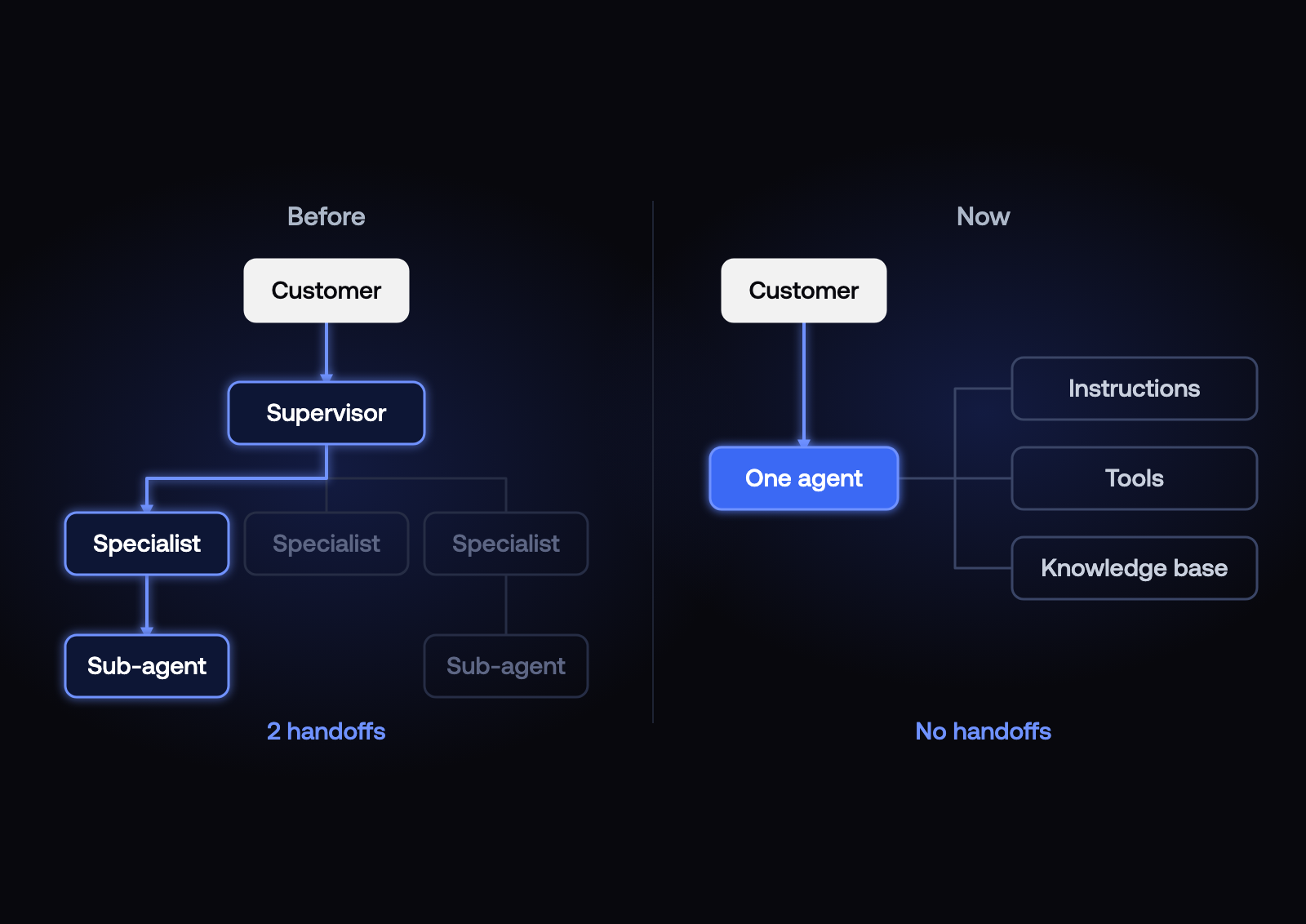

Chatbot vs AI agent in practice: what your customers notice first
Put a scripted chatbot and a true AI agent side by side. Your customers will spot the gap in minutes. A chatbot follows a menu. It asks for fixed inputs, then returns a templated reply. An AI agent understands context, takes actions, and keeps a thread alive across channels. It can reschedule a delivery, issue a refund, and book a call without breaking the flow.
Experience feels different. Chatbots often bounce complex cases to a form or a queue. AI agents reason over policies, look up data, and decide the next best step. They also carry memory. If a customer messages on WhatsApp, then emails later, the agent continues the same case with the same context.
A chatbot chats. An AI agent gets things done.
How AI agents differ from chatbots in capabilities and decision-making
Reasoning and planning. Chatbots map intents to answers. AI agents plan multi-step workflows, then adapt when inputs change. They choose tools, request missing data, and retry when APIs fail.
Tool use and integration. Modern agents connect with external systems such as CRMs, ERPs, payment gateways, and calendars, then use those results to steer the conversation. While many chatbots began as knowledge-base front ends, some modern chatbots can also integrate with other systems, typically with narrower autonomy, less robust error handling, and limited state compared with an AI agent.
Memory and context. Agents maintain working memory for the case. They recall order IDs, prior consent, and the customer’s preferences. Chatbots reset more often, which can force repetition.
Channels and continuity. Agents work across chat, email, WhatsApp, voice, and internal chat like Slack or Teams. They keep one case ID. Chatbots tend to live inside one widget.
Autonomy with handoff. Agents know when to involve a human. They pass full context, including steps taken and pending actions. Chatbots usually escalate with less detail, which slows resolution.
When a chatbot still makes sense for your customer experience
Not every problem needs an AI agent. Consider scenarios like sharing store hours, providing warranty links, or tracking shipments. A well-configured chatbot handles these repetitive queries quickly and consistently, delivering instant answers that improve customer satisfaction while saving agent time. It also helps when you lack system access or cannot expose APIs yet. Keep scope tight, set expectations, and publish clear opt-out routes to a person.
As your cases grow in complexity, a chatbot plateaus. The moment you need policy reasoning, multiple tools, or secure data handling, you have crossed into agent territory.
What an AI agent needs to work: data, tools, and oversight
Grounded knowledge. Feed real product language, internal policies, and edge cases. If your brand uses specific terms, you must train the AI on your internal product language so answers match how your teams speak.
APIs and actions. Connect the agent to your CRM and helpdesk. Add ERP endpoints for orders, refunds, and inventory. Give it read and write scopes that reflect your SOPs.
Verification and safety. Add automated checks before replies ship. You can add verifiers to catch weak support answers and stop risky actions early. Log every tool call with inputs and outputs.
Human oversight. Review sessions, score outcomes, and tag failure modes. You will iterate prompts, policies, and data joins as patterns emerge. Teams that audit AI customer support conversations improve reliability faster.
Measuring the value of AI agents vs chatbots using customer service metrics
Pick metrics that reflect outcomes, not just volume.
- Containment rate: percent of cases resolved without human help.
- First contact resolution: cases solved in one interaction.
- Average handle time: time from first message to resolution.
- Time to first response: speed to the first meaningful reply.
- Escalation quality: clarity and completeness of handoffs, does the agent pass a concise summary, action history, and explicit next steps that the human or customer understands?
- Refund accuracy and policy adherence: actions that match rules.
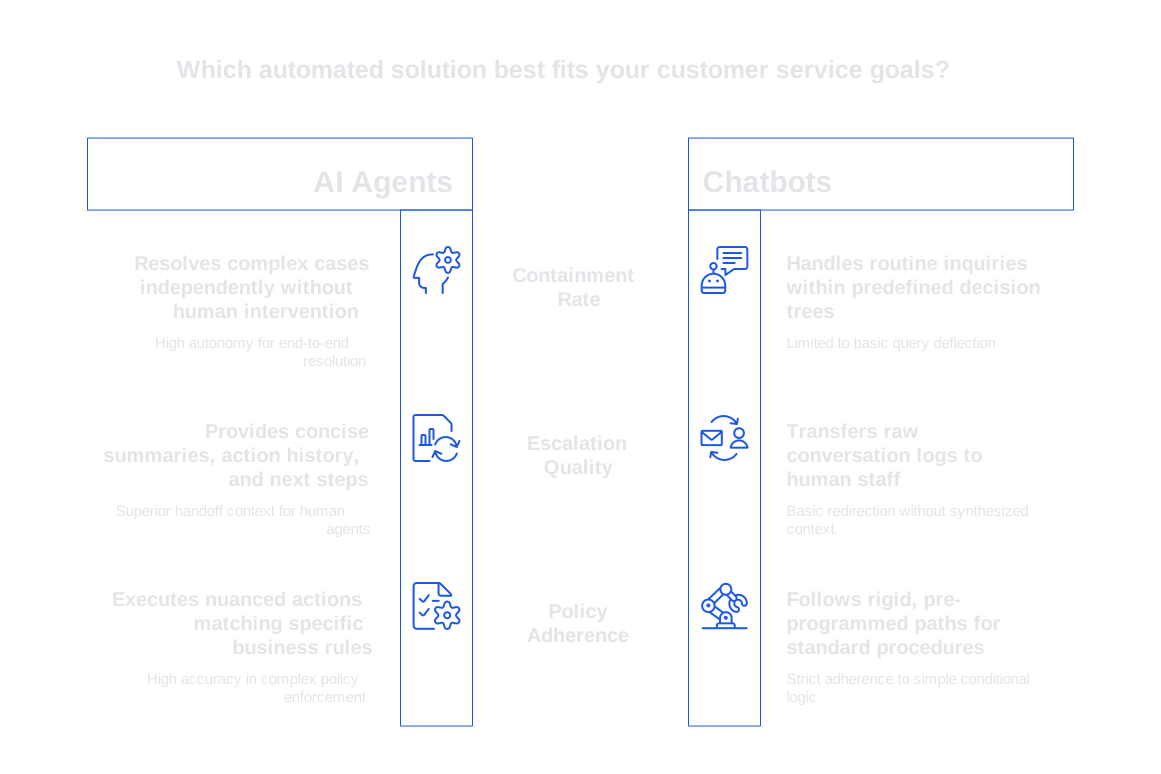
Track these by intent. Compare a chatbot baseline against an AI agent pilot over the same set of intents and channels.
How to pilot an AI agent without rewiring your stack
Start with high-volume intents. Choose two or three frequent requests your team handles. For example: delivery issues in e-commerce, billing updates in telecommunications, appointment changes in healthcare, or subscription adjustments in SaaS. Define the SOP in plain language.
Give the agent the right tools. Expose read-only endpoints first. Add write access after review cycles. Map error codes to friendly messages the agent can explain.
Write a concise system prompt. Keep rules explicit and testable. Include allowed tools, policies, and handoff criteria.
System: You are Acme’s billing agent. Use CRM . get_invoice , ERP . create_refund , Calendar . book_call . If any required field is missing, ask one question. Never guess. If account_risk = true, hand off with a summary.
Force structured notes. Require the agent to record decisions after each action. Your analysts can then review patterns and adjust.
Assistant note: intent = refund_request ; reason = damaged_item ; action = ERP . create_refund ; next_step = send_label
Where leading platforms stand when comparing AI agent vendors to traditional chatbots
The market splits into a few groups:
- Helpdesk-native chat assistants. Useful for simple flows inside a ticketing suite. Strong routing. Limited cross-channel memory and actions.
- Typewise AI agent platform for customer experience. Unlike many solutions, Typewise is built as an AI-native operating system rather than a standalone bot. It deploys agents across multiple channels such as chat, email, WhatsApp, voice, and corporate platforms like Slack or Teams. Teams can configure behavior in natural language, it hands off to humans with full context, integrates with CRM, helpdesk, and ERP, runs on European hosting, and offers outcome-based pricing.
- No-code chatbot builders. Fast to launch. Best for structured FAQs or lead capture. Struggles with deep system actions.
- DIY frameworks and custom stacks. Maximum control with engineering effort. Maintenance and safety reviews sit on your team.
Choose a group based on the complexity you must handle this quarter, not next year. Avoid lock-in to rigid flows that cannot call your systems.
Security and compliance considerations for AI agents compared with chatbots
Data access. Scope tokens and rotate keys. Use per-intent permissions where possible. Store only what you must, for as long as you must.
Personally identifiable information. Redact PII before model input when the task allows. Mask sensitive fields in logs. Limit who can view raw transcripts.
Hosting and residency. Match your regulatory needs. If you serve European customers, prefer EU hosting and documented subprocessor lists.
Traceability. Keep audit trails of prompts, tool calls, inputs, and outputs. You will need this for incident reviews and training updates.
Buying checklist that separates AI agents from chatbots during vendor evaluation
- Can it resolve a full case across channels without human help?
- Does it call your systems and update records safely?
- Can non-technical teams change behavior in plain language?
- Are handoffs rich with action history and next steps?
- Do you get per-intent metrics tied to business outcomes?
- Is hosting aligned with your data residency needs?
The bottom line on chatbot vs AI agent for customer experience
Chatbots answer questions. AI agents resolve cases. If your goals include policy reasoning, system actions, and cross-channel continuity, you need agents. Start small, wire in your tools, and verify every step. The gains show up in resolved tickets, not in menu clicks.
Curious how this looks in your stack? Try a focused agent on one intent, then expand with lessons learned.
Set up a short conversation with Typewise
If you want an AI agent that runs across channels, connects to your systems, and hands off with context, we can help. Meet the team behind Typewise’s AI-native customer operating system and see a targeted pilot. Book a chat with Typewise and explore an outcome-based path to resolved cases, not just replies.
FAQ
What's the primary difference between a chatbot and an AI agent?
Chatbots offer scripted, predefined responses, suitable for simple queries. AI agents, like Typewise, handle complex interactions by understanding context, maintaining memory, and performing actions across multiple channels.
When should I choose a chatbot over an AI agent?
Opt for chatbots when dealing with repetitive, straightforward queries like store hours or tracking shipments. However, for tasks requiring contextual understanding and decision-making, AI agents are indispensable.
How do AI agents handle cross-channel interactions?
AI agents maintain context across various platforms like email, chat, and voice, ensuring seamless continuity. This cross-channel capability allows for uninterrupted problem-solving, unlike isolated chatbots.
What are the integration capabilities of AI agents?
AI agents can connect with systems like CRM, ERP, and calendars, allowing them to automate tasks effectively. While some chatbots can integrate too, they generally lack the depth and autonomy offered by solutions like Typewise.
How do you measure the effectiveness of AI agents vs chatbots?
Evaluate them based on outcomes such as case resolution without human intervention, first contact resolution, and the quality of escalations. Rely on metrics that reflect real improvements, not just interaction volume.
What security considerations should I be aware of for AI agents?
AI agents necessitate rigorous security measures like access token scoping and data residency compliance. Proper deployment ensures secure operations without compromising on performance and functionality.
Why is human oversight important for AI agents?
Human oversight ensures accuracy and safety, enabling teams to refine AI behaviors and rectify errors. Without this, the risk of automated mishaps escalates, potentially damaging your brand and customer trust.
How can Typewise enhance my customer service operations?
Typewise offers AI-native solutions that integrate across various platforms and systems, providing rich context in handoffs. Choosing Typewise accelerates resolution times and improves customer satisfaction through intelligent automation.
Is it possible to pilot an AI agent without full system integration?
Yes, start small by focusing on high-volume intents with Typewise, using restricted endpoints initially. This approach allows you to evaluate AI agent effectiveness without extensive system alterations.
What factors should be considered during vendor evaluation for AI agents?
Assess whether the solution can resolve cases independently, integrates safely with your systems, and allows non-technical teams to modify behaviors. Prioritize capabilities like rich handoffs, actionable intelligence, and data compliance.