
We have a lot of conversations with support teams about what they want from AI, and one thing comes up more and more often: the team already owns a tool that deflects tickets, and it is not what they were hoping for.
Deflection basics: how tickets avoid your queue
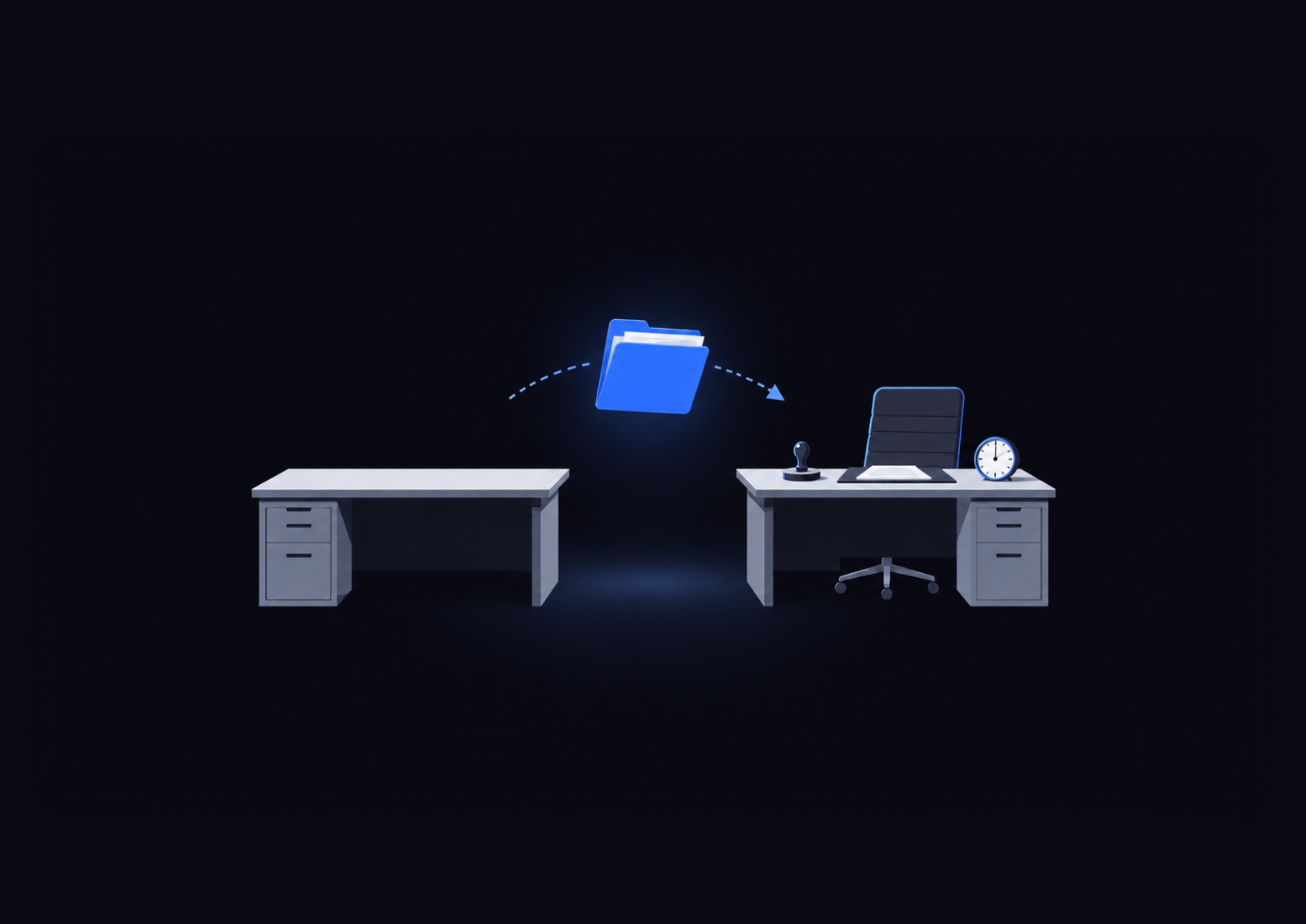
Customer support deflection means resolving a customer’s needs without the direct involvement of a support agent. The customer still receives a solution, but your support queue remains manageable. Deflection occurs through self-service resources, guided workflows, or AI-powered chat. Effective deflection is about reducing friction without limiting customer access. The goal is true resolution, not avoidance. If a self-service process fails, a handoff to human support must be quick and visible. Think of deflection as an initial sorting process that addresses easy, repetitive issues while directing more difficult ones towards full support. When done well, deflection improves service quality and reduces noise in your channels. When done poorly, it can obscure contact paths and erode trust. Aim for the first outcome, every time.
The line between deflection and resolution is easiest to see from a team that already has the first and wants the second. The support lead at a software company described the tool her team uses today. "It can already read and write. So they can provide refunds for people automatically based on a set decision tree of criteria." That is deflection working as designed, and it is exactly what worries her. "I'm just afraid that if we only focus on that, it won't be enough to differentiate the experience from what we already have." Her summary of the current setup: it "feels like just chat deflection right now".
Strategy: align with real customer intent
Start with your most common customer intents. Review and analyze recent support tickets, chats, and emails, applying consistent tags to them for easy categorization. Map each intent to its ideal channel, help center article, in-product tip, or conversational interface. Keep solutions concise, accurate, and updated to reflect current product names, feature flags, and internal terminology. This consistency improves answer quality and reduces the chance of irrelevant or misleading content. For instance, if your strategy involves the use of automated, or generative replies, make sure your models are trained to understand and use terminology specific to your industry or brand. This guide explains how to train AI on your internal product language to ensure automated answers sound like your team. Gather customer feedback with widgets and quick thumbs-up signals, then use this data for ongoing weekly improvements.
Intent alignment is the difference between a customer who was sent somewhere and a customer who is done. The same support lead put the target in one sentence. "These are customers that are not going to come back again because their issue is just resolved. That is a little bit different than just deflecting them to a different place. We want to see it through and make sure their issue is fully resolved." Her team has a phrase for the distinction they are chasing, "automation versus AI-native support", and it is the reason they went looking beyond the tool they already have.
Benefits for customers and your team
Deflection reduces wait times and improves perceived speed of support. It allows agents to focus on more complex issues, while customers resolve simple questions in minutes. This leads to less back-and-forth, greater clarity, and a more efficient team that can focus on root causes and proactive outreach. Even when a handoff to an agent is needed, first response time improves. For further insights on operational impact, check these ways AI improves first response time. Deflection also enhances data quality. Structured flows collect data efficiently and free of errors or irrelevant information. This refined data supports better routing and more accurate forecasting, resulting in calmer backlogs and more predictable staffing levels.
Metrics and formulas you can trust
Choose metrics that measure both resolution and effort, not just the percentage of issues contained within automation.
Buyers describe this in plainer words than the formulas do. Asked how she would judge an AI agent, the software company's support lead named two things. First, the feeling of the experience, which she admitted is hard to measure. Second, "the least amount of effort and friction for the customer to be able to reach whatever resolution they want". Only after that did she add the numbers: "the hit rate, the resolution rate, how many of them are actually preventing tickets from being created". Containment came last, not first. If you track one effort metric, Customer Effort Score is the one she is describing.
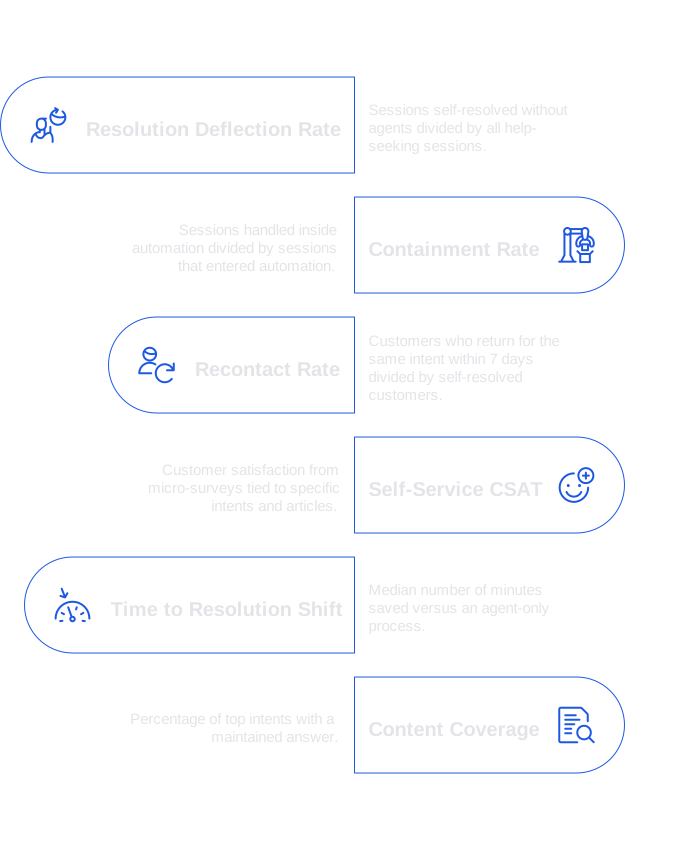
Use these essential formulas:
- Resolution deflection rate = Sessions self-resolved without agents ÷ All help-seeking sessions.
- Containment rate = Sessions handled inside automation ÷ Sessions that entered automation.
- Recontact rate = Customers who return for the same intent within 7 days ÷ Self-resolved customers.
- Self-service CSAT from micro-surveys tied to specific intents and articles.
- Time to resolution shift: median number of minutes saved versus an agent-only process.
- Content coverage: percentage of top intents with a maintained answer.
Monitor your mix of support channels. For example, if email volume spikes while chat deflections increase, investigate further. Combine quantitative data with regular conversation reviews to confirm that customer needs are truly addressed. Never celebrate containment metrics if they lead to unnecessary recontacts.
Guardrails for complex B2B scenarios
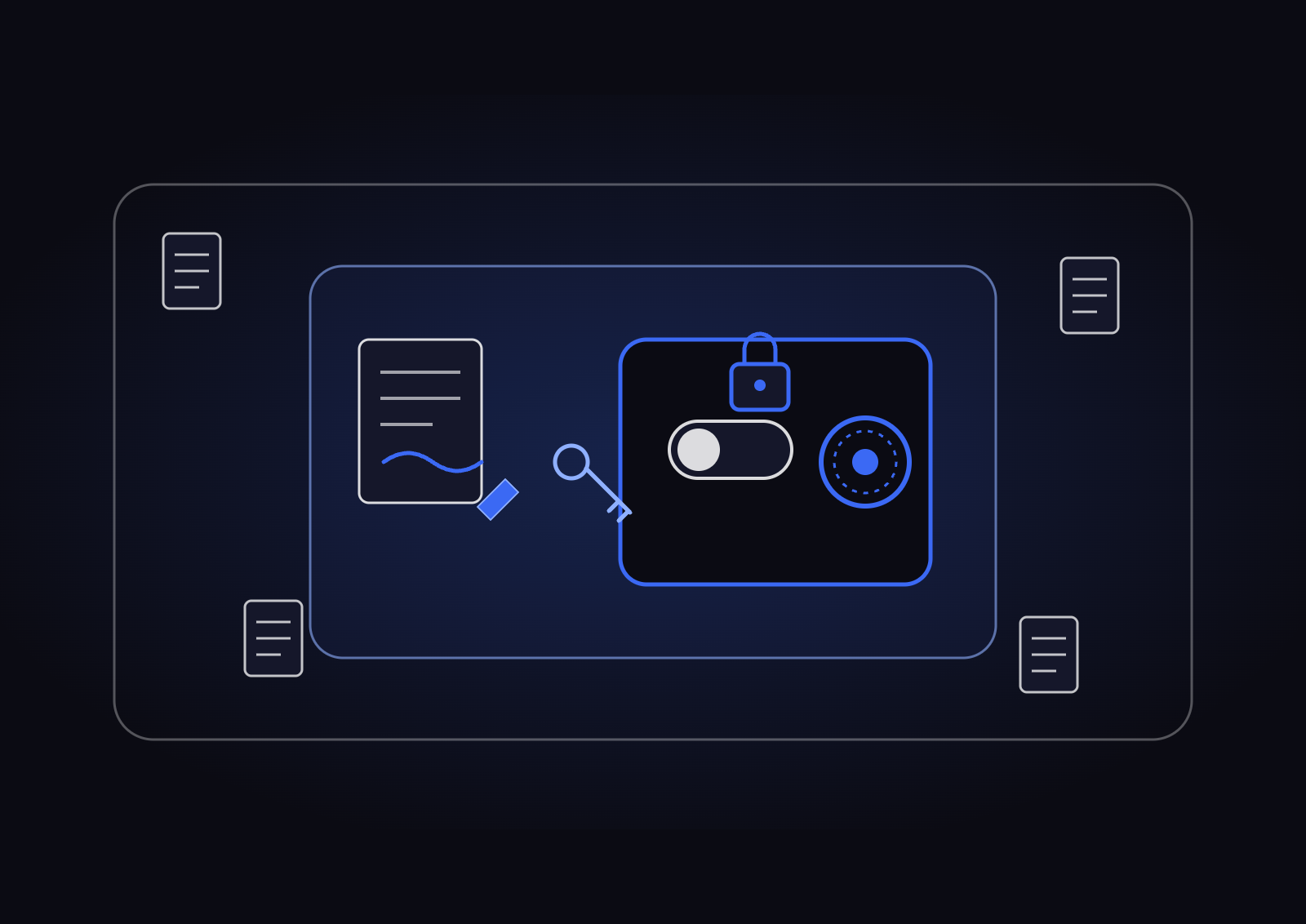
Where issues affect sensitive areas such as billing, security, or service-level agreements, introduce stricter controls. Always require authentication before making account changes. Restrict free-text entry in sensitive processes, preferring structured responses that align with policy. For high-risk inquiries, add a layer of human review. Document how evidence is attached to tickets and store all AI prompts and outputs for auditing. Offer clear escalation paths to named owners and communicate expected timelines with every handoff. Automation is more readily accepted when risks are controlled and accountability is visible.
Technology stack and leading tools overview
Deflection involves several key technology layers: a searchable knowledge base, intent detection, conversation orchestration, agent assistance, and analytics. Mature technology stacks combine a robust help center with efficient retrieval systems and controlled AI-generated responses. Teams often select both platform and point solutions. Popular options include Intercom, Typewise, Ada, Salesforce Service Cloud, Zendesk, Ultimate, Forethought, and Freshdesk. Evaluate technology according to your channel requirements and privacy standards.
Where Typewise fits: Typewise specializes in AI writing assistance integrated with your existing tools. It seamlessly works with email, CRM, and chat systems, suggesting accurate, brand-appropriate replies to reduce response time while prioritizing enterprise privacy. In deflection programs, Typewise improves help article quality, macro accuracy, and agent escalations, thereby increasing answer precision and decreasing unnecessary escalations. Test Typewise alongside chatbot solutions to compare effectiveness and governance.
Governance and auditing to maintain quality over time
Service quality can decline as products evolve. Establish a monthly audit process. Sample interactions by intent and customer segment, then grade for accuracy, tone, and compliance with policy. Feed insights into your development backlog. For a structured approach, reference this field guide on auditing AI customer support conversations. Alongside audits, regularly update and review your content to ensure its accuracy and relevance. Remove or redirect outdated articles. Track content changes between versions to explain results to regulators and customers when necessary.
Common tickets deflection pitfalls and how to avoid them
- Obscuring options for reaching human support, which quickly diminishes trust.
- Focusing only on deflection rates, while ignoring repeated customer contacts.
- Allowing your knowledge base to become outdated without dedicated ownership.
- Overlooking brand voice in automatically generated replies.
- Neglecting to pass context during escalation, causing agents to repeat the discovery phase.
- Emphasizing containment over effective resolution. Measure actual solved outcomes instead.
Assign clear ownership, set SLAs, and maintain documentation. Design with the expectation of occasional failures, not with the promise of flawless automation.
Quick checklist for your next quarter
- Tag your top 10 intents with clear, consistent definitions.
- Develop canonical answers with acceptance criteria and supporting links.
- Set confidence thresholds and ensure easy-to-find escalation options.
- Enable live tracking of self-service CSAT and recontact rates.
- Implement versioning for help articles and AI prompts, assigning clear ownership for updates.
- Conduct weekly reviews of unresolved sessions and escalation cases.
- Schedule quarterly reviews of privacy and compliance protocols.
Deflection works when customers feel guided, not gated.
Where automation meets agent workflow
Deflection isn’t a barrier in front of your team, it’s an intelligent system that channels the right issues to the right resources. AI-powered suggestions help agents craft faster, more precise replies with fewer edits. If you’re interested in practical approaches, check out these ways AI improves first response time in support teams. Combine this with comprehensive training in your brand and product language for consistently targeted responses. This guide on training AI using your internal product language offers a step-by-step approach.
Not every team wants full resolution, and the honest version of this advice says so. The digital lead at an energy utility was clear about the goal for his colleagues in collections. "We don't want 100 percent AI resolution either. They said themselves they would already be helped enough if only the emails that actually need handling landed in their queues." For that team, deflection in the narrow sense, keeping the wrong tickets out of the queue, is the first win, and resolution comes later.
So the choice is not deflection or resolution. It is knowing which one your team is asking for this quarter, and measuring that one honestly. If you are still deciding where to start, the tickets these buyers picked first are in our article on which customer service tickets to automate first.
Ready to discuss your deflection plan? If you want expert advice and tools tailored for your support stack, contact Typewise. We help teams provide clear answers, reduce response time, and maintain a consistent brand voice. Get started at typewise.app.
Quotes are translated where the conversation was in German, and anonymised. Only the customer's side is quoted.
FAQ
What is customer support deflection?
Customer support deflection involves solving customer queries without direct human interaction, using tools like self-service options and AI. It's about resolution, not simply reducing contact, ensuring that unresolved issues can seamlessly escalate to human agents.
How does Typewise aid in customer support deflection?
Typewise enhances deflection by improving help article quality and automating responses with brand-consistent messaging. Its AI-driven tools help maintain accuracy and reduce unnecessary escalations.
Why are containment metrics potentially misleading?
Focusing solely on containment can mask repeated customer issues if recontact rates are ignored. True success should measure problem resolution, not just keeping customers from contacting support.
What common pitfalls should be avoided in deflection strategies?
Avoid obscuring access to human support and allowing content to become outdated. Prioritize effective resolution over simple containment to maintain customer trust.
What role does AI play in deflection?
AI automates repetitive tasks, reducing the load on support teams, but misuse can lead to ignored context and misplaced priorities. A fine balance is key to prevent frustrating customer experiences.
When is a human agent necessary in deflection?
Situations involving complex or sensitive issues like billing or security require human intervention. Efficient escalation guidelines are crucial to redirect such cases swiftly and appropriately.
How should customer feedback be integrated into deflection strategies?
Regular feedback via surveys and interaction analysis helps refine deflection processes. This ensures solutions remain relevant and customer concerns are genuinely resolved.
What can go wrong with outdated content in deflection?
Outdated content can mislead customers, leading to unresolved issues and increased recontacts. Continual updates and ownership of content are pivotal to sustaining an effective support strategy.
How important are escalation options in a deflection strategy?
Clear escalation options are vital, as they ensure unresolved issues don't languish in automated flows. These options should be easy to find and quick to execute, preserving customer trust.