

Rethinking Escalation in Customer Support: Focus on Outcomes, Not Queues
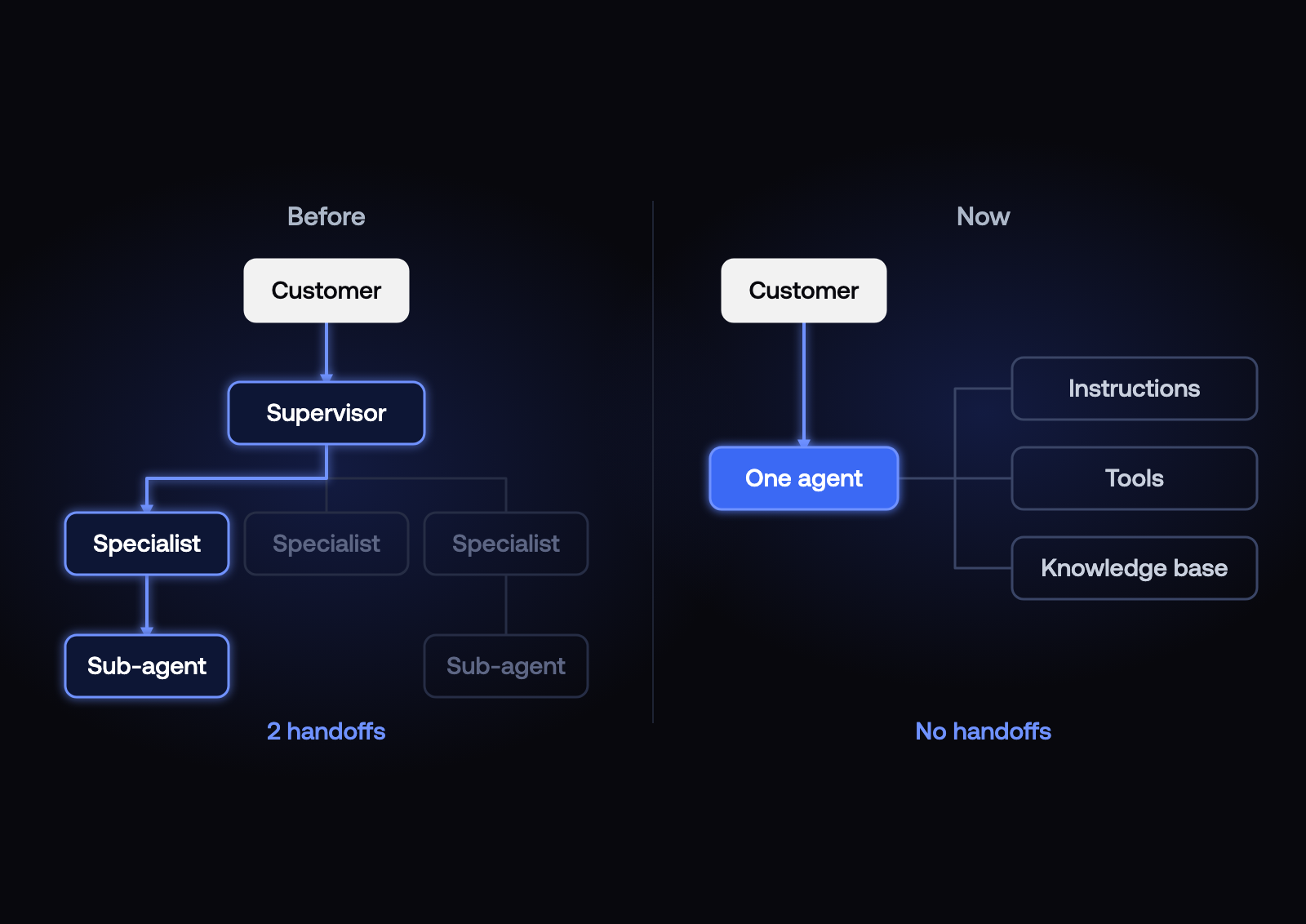
Customers are focused on their goals, not on how tickets are shuffled between teams. Outcome-based routing transforms support by directing every contact toward a clearly defined result instead of merely moving requests along department or queue lines. By routing based on intent, context, and business objectives, organizations can deliver faster resolutions without the drawbacks of traditional tier jumps.
Route to the outcome, not the org chart. Embracing this change aligns support more closely with product, finance, and customer success teams. It also creates shared clarity around what “done” means for each ticket type. With explicit outcomes, you can predict effort, match the right case owner, and drastically reduce the frustrating “ping-pong” handoff effect.
What Outcome-Based Routing Looks Like in Practice
Start by building a catalog of defined outcomes, each linked to company policies. Here are some illustrative examples:
- Deliver a refund decision within two hours for eligible orders, with automatic approval for amounts beneath a set threshold.
- Recover a failed payment by sending a secure link and confirming account status upon completion.
- Ship a replacement if inventory is available, or trigger a backorder update if not.
- Explain a usage limit with clear, plan-specific product language.
- Escalate a security concern directly to a certified responder, with audit logging activated.
Agents, automated workflows, and other support steps become flexible components rather than fixed destinations. Each customer journey is mapped to the most efficient sequence of actions, potentially blending AI-generated replies, API integrations, specialist input, or simple verification steps, to achieve the specified outcome.
Designing a Practical Outcome Taxonomy for Customer Support
Begin with a concise, reliable list of outcomes. Make each outcome specific, measurable, and, where necessary, reversible. A robust starting taxonomy might contain: answer a question, fix account access, adjust billing, replace or repair, collect diagnostics, and schedule follow-up.
Attach clear business rules to each outcome, defining eligibility, risk thresholds, service levels, and approval steps. Ensure names are customer-friendly, steering clear of internal acronyms that could complicate routing logic and downstream analytics.
Finally, clearly assign responsibility for each outcome. For example, determine who is responsible for ensuring quality actions such as “adjust billing.” Outcome-based routing functions best when every outcome has a dedicated owner, preventing ambiguity and misalignment.
Linking Intents and Context Signals to Outcome Routing
For outcome-based routing to work effectively, clear intent recognition is crucial. If your company uses AI-enabled customer service technology, it is key for the system to understand plan names, feature flags, and edge-case phrasing. Early investment in training AI on your internal product language ensures that even vague requests are translated into actionable, accurate intents for outcome routing.
Enrich intent detection with structured signals to boost decision quality:
- Account data: including plan tier, region, account tenure, and entitlement windows.
- Event trails: such as recent system errors, failed payments, or feature toggle activity.
- Conversation cues: indicators of sentiment, urgency, or escalation needs.
- Risk flags: such as potential security issues, compliance triggers, or VIP customer tags.
Avoid overfitting outcome decisions to keywords alone. Instead, map detected intents to outcomes using evolving policy frameworks, policies adapt with business needs, while keywords shift daily.
Building the Orchestration Layer for Outcome-Based Routing Across Channels
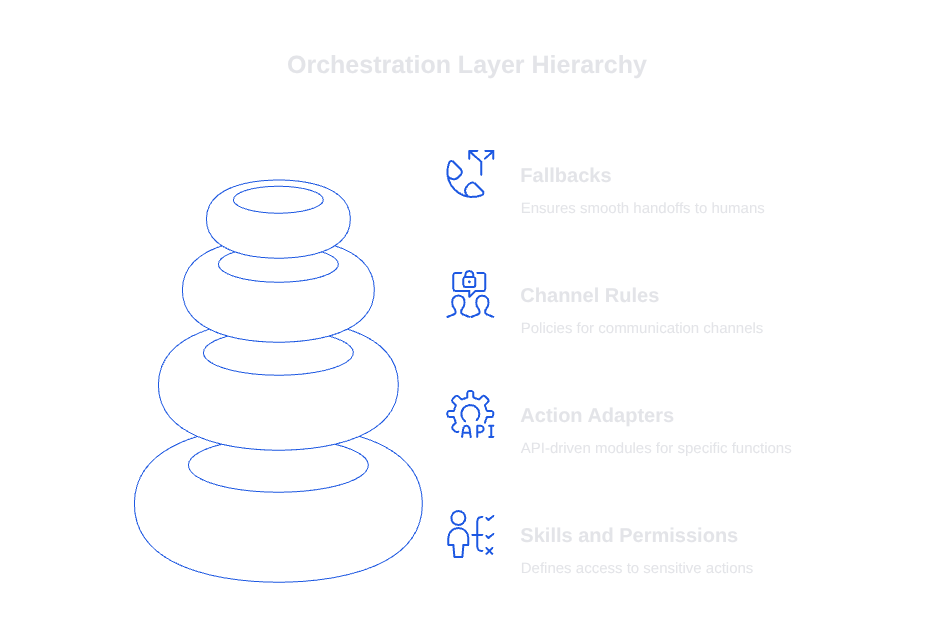
A strong orchestration layer translates routing decisions into concrete actions. It allocates resources, enforces service levels, and triggers additional verification if confidence falters. This layer operates on top of existing CRM, helpdesk, or contact center platforms.
Key Orchestration Elements
- Skills and permissions: defines who can perform sensitive actions like issuing credits, changing entitlements, or accessing personal information.
- Action adapters: API-driven modules for functions such as refunds, replacements, and subscription changes.
- Channel rules: set policies for email, chat, phone, or in-app communications.
- Fallbacks: ensure smooth handoffs to humans when context is missing or decisions cannot be automated safely.
Although queues still exist in outcome-based routing, their role changes. Instead of being the destination for requests, they are now tools used to manage capacity by prioritizing the shortest valid paths to achieve defined outcomes under the current load of support requests.
Measuring Success with Outcome-Based Metrics
Traditional metrics like average handle time no longer serve as a guiding metric. Instead, success is measured by how quickly and effectively support achieves defined outcomes for each issue type. This new focus links service levels to real customer expectations and bottom-line impact.
- Time to outcome: from initial contact to confirmed resolution.
- First contact resolution rate: only counts cases where the defined outcome is achieved on the first attempt.
- Reopen rate: flags cases of poor initial routing or weak policy adherence.
- Cost per outcome: factors in automation, human effort, and potential adjustments.
During peak periods, if speed to first response matters, review these practical approaches to improving first response with AI. Rapid initial engagement creates time for more complex resolutions without damaging customer trust.
Preventing Failures with Verifiers and Audits in AI-Driven Routing
Outcome-based routing is at risk if confidence is overestimated. Introduce robust verification steps to safeguard quality. Use model disagreement, policy validation, and data checks before committing to key actions.
- Policy verifiers: confirm that all required conditions are met prior to issuing refunds or credits.
- Content verifiers: assess AI-generated replies for hallucinations, tone alignment, and contextual completeness.
- Security verifiers: prevent sensitive actions without strong identity confirmation.
You can incorporate verification checkpoints to catch poor answers before they reach customers. Regular audits, sampled and assessed by outcome type, not by queue, will help you spot recurring issues early in your process.
Choosing Tools and Platforms to Enable Outcome-Based Routing in 2026
There are multiple ways to achieve outcome-based routing. You might extend your CRM or contact center with custom policy layers, build your own router using language models and a rules engine, or adopt an AI support platform built specifically for outcome-based logic.
Typewise belongs to the third category. It integrates seamlessly with your existing CRM, email, and chat tools, handling writing, routing, and verification within your existing workflows. Typewise also emphasizes data privacy and residency. Be sure to compare your current stack’s native routing capabilities with those of AI-first support tools, such as Typewise, to evaluate the best fit for more complex customer journeys.
Getting Started: Routing Prompts and a Safe Rollout Strategy
Begin by targeting one or two of your highest-volume outcomes and carefully instrument them for data and feedback. Start by diverting only a subset of traffic. Ramp up gradually as you gain confidence in the signals, policies, and automated verification.
A Sample Routing Prompt
Use a structured, policy-driven prompt template that distinguishes between intent, outcome, and next actions:
role: system instruction: You route support messages to outcomes, not queues. Use policies and account data only. If confidence < 0.75, request one clarifying question. outcomes: \[ answer question, fix account access, adjust billing, replace or repair, collect diagnostics, schedule follow-up \] return_format: \{outcome: string, confidence: number, required_actions: \[string\], handoff: \{needed: boolean, skill: string\}\} constraints: Never disclose internal notes. For billing actions, require plan_tier and region.
Low-Risk Rollout Steps
- Define your outcome taxonomy and draft clear policies for each outcome.
- Train language models on your organization’s product terms and plan names as needed.
- Integrate verifiers for checking policy adherence, content quality, and security.
- Use shadow-routing to compare automated routing outcomes against current human results.
- Gradually ramp traffic by user cohort, activating automation only where results are safe and reliable.
If you find your taxonomy or language models are not producing the expected results or leading to effective outcomes, it may be beneficial to review the supporting data. This may necessitate updating or refreshing terms, synonyms, and policy tests regularly based on real-world performance and feedback. A focused set of realistic, well-maintained examples will always outperform a large but unfocused corpus.
How Typewise Supports Outcome-Based Routing Without Disrupting Existing Systems
Typewise can integrate to work seamlessly with your existing CRM, email, and chat tools. It can perform actions like writing, routing, and verifying within the workflow of these systems. With outcome-focused routing logic and advanced verifiers, Typewise reduces unnecessary second touches and repeat edits.
Because product language is key to outcome-based routing, Typewise’s training workflows help you capture the right terminology for plan names, error messages, and entitlement policies. Learn more about training AI on your product language to make routing decisions and support replies even more precise.
During high-demand periods, outcome routing can be paired with proven speed tactics.
Ready to explore routing by outcome, not queue? If you’re interested in piloting outcome-based routing within your current systems, reach out to our team. We can collaborate on shaping your taxonomy, designing prompts, and configuring verifiers, enabling a measured, safe rollout within your existing stack. Start the conversation at typewise.app.
FAQ
How does outcome-based routing differ from traditional customer support methods?
Outcome-based routing focuses on achieving specific resolutions rather than transferring tickets between departments. It emphasizes intent and context to streamline support processes, reducing unnecessary handoffs and accelerating resolutions.
What are the key benefits of using outcome-based routing for customer support teams?
Outcome-based routing improves resolution speed and efficiency by aligning tasks with outcomes, not departments. It reduces the 'ping-pong' effect of ticket handling, enhancing customer satisfaction and freeing up resources.
How can companies ensure the success of outcome-based routing?
Success relies on a clear taxonomy of outcomes, robust verification processes, and AI systems trained in company-specific language. Integrating Typewise can support precise routing and quality verification within existing systems.
Why is intent recognition crucial in outcome-based routing?
Accurate intent recognition ensures that customer requests are directed to the appropriate outcome, reducing errors and enhancing the quality of support. Misaligned intent can lead to inefficiencies and incorrect resolutions.
What role do verifiers play in AI-driven outcome-based routing?
Verifiers act as quality checks in the routing process, preventing errors before they reach the customer. They ensure compliance with company policies and maintain the integrity of AI-generated responses.
How can companies start transitioning to outcome-based routing?
Begin by focusing on high-volume outcomes with well-defined policies. Use a gradual rollout strategy, leveraging Typewise's capabilities to integrate with current systems without disrupting workflows.
Does outcome-based routing eliminate the need for human intervention in customer support?
While it significantly reduces the need for human touchpoints, there are still scenarios that require human insight, especially in complex or ambiguous cases. Typewise can handle many tasks but doesn't replace human judgment entirely.
How do queue systems function under outcome-based routing?
Queues exist to prioritize tasks based on capacity and outcome relevance, not as end destinations for support. Outcome-based systems like Typewise optimize queue functions to ensure tasks are resolved efficiently based on current demands.