

Ticket Deduplication With AI: Uncover Hidden Duplicates and Streamline Your Backlog
Many support teams find that their ticket backlog contains multiple reports describing the same underlying issue, often submitted through different channels, but all pointing to one customer problem. Ticket deduplication with AI brings these threads together, establishing a single source of truth. This means agents access complete context in one place, not scattered across multiple tabs, and customers follow a single, coherent conversation. As a result, confusion and repetitive work are minimized throughout your workflow.
To start, define straightforward clustering rules that are easy for operations
teams to understand. For example:
if similarity_score > 0.90 and same_account is true then candidate_duplicate.
Pair this approach with useful data points: information such as email headers,
conversation IDs, and user IDs can often provide important clues for identifying
duplicate tickets with AI. Begin with conservative matching criteria, ensuring
that only highly likely duplicates are grouped, and gradually expand your
coverage as confidence grows in your system’s ability to identify duplicates
accurately.
One way to view duplicates is not as mere noise, but as lost context. By recovering this context, your team can deliver a higher level of service quality.
How Ticket Deduplication With AI Boosts First Contact Resolution for Support Teams
Achieving first contact resolution (FCR) relies on agents having a full picture from the outset. When AI merges duplicate tickets, the entire customer timeline is accessible in one record, agents see previous attempts and what steps were promised, and can respond thoroughly and efficiently. This reduces the need for repeated follow-ups from both customers and support staff.
If FCR is a critical goal, it’s also worthwhile to consider how AI can shorten response times overall. This guide to seven ways AI improves first response time without adding headcount offers actionable tips. Combining these ideas with deduplication can help you reduce both backlog and queue times.
Set clear ownership rules to improve efficiency. For example, assign the
primary_ticket to the ticket with the earliest SLA breach within a cluster.
This helps prioritize issues and ensures the clock is running on the most urgent
problem, promoting faster resolution and reducing delays. Customer interactions
should always be consolidated on this primary thread.
Signals and Features Your AI Model Should Weigh for Ticket Deduplication
High-quality ticket merges depend on strong signals. A blend of semantic (language-based) and operational data yields the best clustering results. Here’s a practical checklist to inform your approach:
- Semantic similarity from embeddings that analyze subject, message body, and notes.
- Exact and fuzzy matches on order IDs, error codes, and device IDs.
- User identity triangulated from email, account, and signed session data.
- Tags for product, version, region, and language.
- Attachment fingerprints using file hashes or file sizes.
- Temporal proximity between tickets and related events.
- Historic patterns such as past merges and ticket reopens.
It is crucial to train your model to recognize your company’s internal terminology, including synonyms and commonly used feature nicknames. For more practical advice, see how to train AI on your internal product language. The right vocabulary reduces false negatives and ensures related tickets are grouped properly.
Clearly document the weighting of different features in an accessible format.
For example: weight_text = 0.55 , weight_ids = 0.25 , weight_time = 0.20. By
doing this, stakeholders can quickly review and adjust the decision logic as
needed.
Clustering Logic and Safe Merge Rules for AI-Based Ticket Deduplication
It’s important to differentiate between clustering (deciding which tickets potentially represent the same issue) and merging (deciding which ticket becomes the primary record). Separating these steps makes it easier to track and, if necessary, reverse any changes.
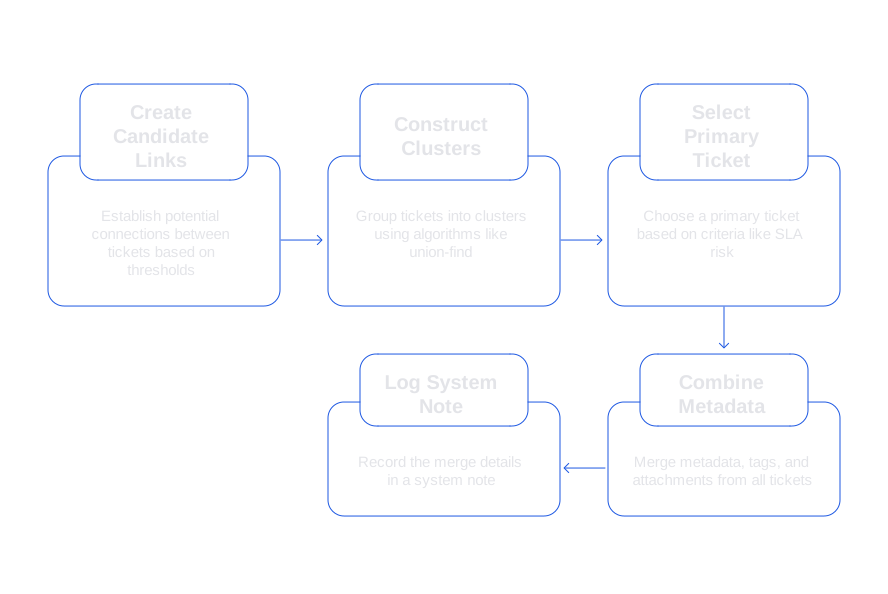
- Create candidate links between tickets using the thresholds you’ve defined.
- Construct clusters using algorithms like union-find, with size caps to maintain stability.
- Select a primary ticket using criteria such as SLA risk, channel priority, or ticket age.
- Combine metadata, tags, and attachments from all tickets within the cluster. Any discrepancies or duplicated information should be addressed carefully, resolving conflicts for the most accurate record.
- Log a system note listing all merged ticket IDs and the reasons for merging these records.
Maintain a reversible audit log to ensure transparency and control:
merge_id , timestamp , old_ticket_ids , primary_id , rationale. If a merge
appears incorrect, unmerge promptly and notify the responsible agent for review.
Integrating AI Ticket Deduplication With Workflows Across CRM, Email, and Chat
AI deduplication delivers maximum value when embedded directly into your daily tools. Implement event listeners within your CRM, help desk, and chat infrastructure. Upon receiving a new message, extract relevant features and consult the deduplication service. Update the primary ticket and close out the duplicates with clear linkage.
For scalability, leverage webhooks or message buses:
on ticket_created publish features_json to topic:dedeup-v1. This lets
downstream systems process merges and notifications seamlessly, ensuring users
get updates in near real time.
Empower agents with preview cards before merging. These cards should present similarity scores, shared identifiers, and last activity timestamps, letting agents confirm or decline proposed merges with a single click. Strive for a user interface that is fast, transparent, and reliable.
Always communicate ticket merges clearly and politely to customers. When threads are consolidated, send a straightforward explanation ensuring the customer nothing has been lost. Clear communication builds trust and minimizes confusion.
Reliable Data Mapping for Consistent AI Deduplication Decisions
A dependable deduplication model requires mapping every data field that informs a decision. While this process is not resource-intensive, it is essential to prevent drift over time. For a robust process, reference the complete guide to mapping information sources in AI customer support, which covers tracking origins, data owners, and refresh cycles.
Keep your mapping and schema versions up to date:
schema_version = 3 , features : \[ text_score , order_id_match , time_gap_mins \].
Update mappings whenever your product changes, retrain your model, and redeploy
so your system remains effective and relevant.
Key Metrics for Measuring the Impact of AI Ticket Deduplication
To measure success, use a concise set of KPIs that truly reflect team and business goals, steering clear of vanity metrics. Focus on these core ticketing outcomes:
- First contact resolution rate for deduplicated ticket clusters.
- Average time to first response for merged primary tickets.
- Backlog volume and average queue age, segmented by priority.
- Agent collision rate, incidents where multiple agents work the same issue.
- Precision and recall scores for automated merges, as verified by sample reviews.
- Customer effort scores for resolved clusters.
Ensure your analytics tool tracks these formulas transparently, for example:
fcr_cluster = resolved_on_first_reply / total_clusters_contacted. Review
results weekly and share key findings with your team through quick briefings or
notes.
The AI Ticket Deduplication Vendor Landscape and How Typewise Fits In
Many platforms offer rule-based duplicate detection features or plug-in apps. Organizations using tools like Zendesk, Salesforce Service Cloud, Intercom, Freshdesk, or HubSpot may find these suitable for straightforward scenarios and smaller ticket volumes.
Typewise, in contrast, operates alongside these systems as an advanced AI customer service platform. It integrates with your CRM, email, and chat environments with minimal setup. With Typewise, you gain AI-powered writing, ticket suggestion, and deduplication features tailored to your brand voice. Typewise is designed to meet enterprise privacy standards, so your data flows remain under your control.
While some solutions focus on either deduplication or basic suggestions, Typewise combines intelligent writing assistance with ticket intelligence, allowing agents to respond promptly within one unified workspace. It’s a strong choice when you require both superior language tools and disciplined queue management, not just a point solution.
Quick-Start Rollout Playbook for Implementing AI Ticket Deduplication
Adopt a focused initial deployment. Choose one channel, product segment, or region, and define your success metrics before launching a controlled pilot.
- Gather a labeled sample of duplicate and unique tickets for training and testing.
- Collaborate with legal and support leaders to set clear, agreed-upon merge policies.
- Deploy a shadow mode where merges are suggested, but not yet automated.
- Gather agent feedback, adjust similarity thresholds, and improve logic.
- Activate auto-merge only for ticket pairs with high confidence scores.
- Broaden your pilot by channel and language after securing stable, positive results from at least two sprints.
Train your team on the new workflow in regular standups, and proactively share
examples that highlight wins and challenging cases. Document your process in a
concise runbook, e.g., if cluster_size > 8 then escalate to human_review, and
keep this resource easily accessible, close to the active queue.
Operational Safeguards That Protect Customer Experience in AI Ticket Deduplication
In deduplication, accuracy should always trump aggressiveness. Limit the size of identified clusters, and avoid merging tickets from different customer accounts unless you have definitive identifier matches. Establish time windows so outdated tickets are not inadvertently grouped with new reports. Clearly track merge reasons in every system note for ongoing transparency.
Auditing should be embedded in everyday operations. Regularly sample merged
clusters and assign them quality scores. Make it easy for agents to reverse
merges that prove incorrect, and maintain a model version change log, e.g.,
model_name : dedupe_24q4 , rollout : canary 10 percent. Communicate updates
proactively with your team to keep everyone informed.
Frequently Asked Questions on Practical Aspects of AI Ticket Deduplication
- Should we merge tickets across different languages? Only if content and identifiers clearly align to the same issue.
- How should we handle spam or autoresponder tickets? Filter them out before running the deduplication process.
- Where do macros fit in the process? Attach macros only to the primary ticket in each cluster.
- How should we explain merges to customers? Use clear, brief notes in plain language to outline what happened.
Ready for cleaner ticket queues and faster first contact resolution? If you’re searching for an AI system that integrates seamlessly with your existing technology stack and upholds strict data privacy, find out more about how Typewise can fit your needs. Share your requirements, and we’ll tailor a solution that matches your workflow.
FAQ
What is ticket deduplication in AI?
Ticket deduplication in AI involves using artificial intelligence to identify and merge duplicate customer support tickets, ensuring a single thread of communication. It increases efficiency and reduces confusion by eliminating redundant information.
How does AI deduplication impact first contact resolution (FCR)?
AI deduplication can significantly improve FCR by providing agents with a complete view of customer history in a single ticket. This unified view allows agents to resolve issues more efficiently without needing follow-ups.
What risks are associated with AI ticket deduplication?
Poorly configured AI deduplication can lead to incorrect merges, potentially merging unrelated tickets and creating confusion. It's crucial to continually refine and audit AI models to ensure accuracy and reliability.
How does Typewise assist in ticket deduplication?
Typewise provides advanced AI tools that integrate with existing systems to streamline ticket deduplication. Its platform ensures privacy and accuracy, reducing manual errors and optimizing support workflows.
Should different language tickets be merged automatically?
Merging tickets across different languages should only occur when identifiers clearly indicate the same issue. Missteps in this can lead to miscommunication and unresolved queries.
What operational safeguards are necessary for AI deduplication?
Operational safeguards include setting conservative thresholds, maintaining a reversible audit log, and regularly sampling and reviewing merged clusters. Such measures prevent errors and ensure ongoing transparency.
Is user feedback important in AI deduplication?
User feedback is vital for continuously refining AI logic and thresholds. Ignoring feedback can result in inaccurate merges and decreased support efficiency.
What KPIs should be tracked to measure deduplication success?
Key KPIs include first contact resolution rate, average response time, backlog volume, and precision-recall scores for merges. These metrics provide insight into efficiency and effectiveness.