
Reducing support agent burnout with AI by eliminating monotonous tasks
Burnout rarely starts with complex cases. It starts with repetitive clicks and copy-paste work. Opening ten tabs to find a contract. Typing the same password reset reply again. Rebuilding context that already lives in your CRM. That grind steals time and energy. The right AI removes the grind and preserves your team’s judgment.
We will consider various tasks that AI can undertake, with each task reducing queue clutter and lightening the cognitive load on agents. Your team keeps the conversations that need empathy and negotiation. Machines handle the sorting, filling, and summarizing.
Reducing support agent burnout with AI triage and queue shaping across every channel
Task queues can grow over time when small tasks accumulate. AI triage classifies, deduplicates, and routes before an agent even looks. It pulls context from CRM, helpdesk, and past threads. It writes a short summary and a safe first draft.
Want examples that move the needle fast? Explore practical ways AI improves first response time. Faster first replies calm customers. They also help agents who hate starting each day with a red backlog.
- Intent detection: warranty, billing, access, or outage.
- Spam and duplicate removal: fewer noisy tickets reach agents.
- Priority routing: SLAs, VIP flags, and churn risk.
- Drafting: safe answers for common issues, ready for send.
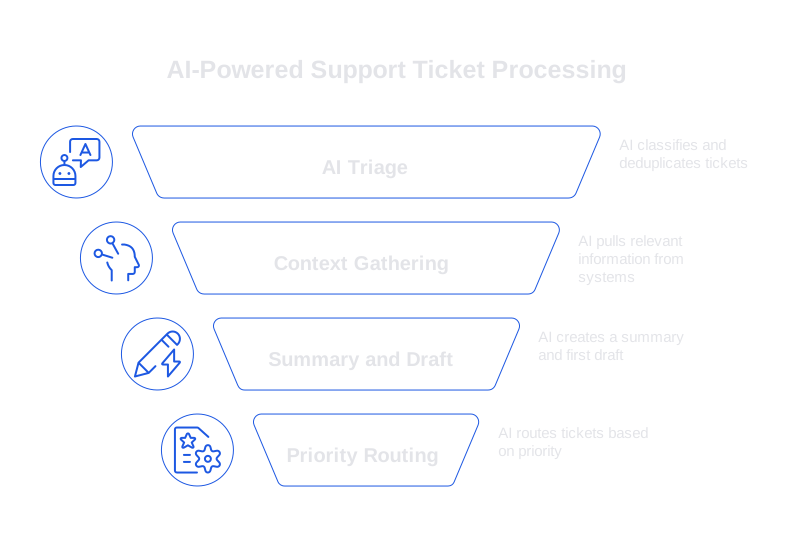
Typewise runs this triage across chat, email, WhatsApp, voice, and Slack or Teams. The same logic applies everywhere. That consistency trims cognitive switching costs.
Reducing support agent burnout with AI assistance during live calls and voice channels
Calls create intense pressure. Agents juggle listening, note taking, and system searches. AI can transcribe in real time and surface exact steps. It can suggest next actions and fill forms during the call.
Deflect what should not be a call. Offer callback scheduling and channel shifts when volume spikes. Learn how this works in practice with voice AI for call deflection and real-time coaching. You protect agent focus and keep customers informed.
Reducing support agent burnout with AI self-checking workflows that prevent rework
Bad AI replies cause rework and stress. Add verifiers that check facts, tone, policy fit, and security. Low confidence should trigger a second pass or handoff, not guesswork.
See how to design these checks with self-checking AI workflows that add verifiers. You cut escalations caused by simple mistakes. Agents spend less time apologizing and fixing avoidable errors.
Reducing support agent burnout with natural-language configuration that removes tool fatigue
Flow builders often sprawl. One change breaks three paths. CX leaders then wait on IT tickets. Typewise allows you to configure AI actions using simple, everyday language. You describe intents, tone, data sources, and escalation rules. No diagrams. No vendor-only scripts.
This short path to change matters. Agents see updates land quickly. Leaders can iterate during a live day, not a quarterly cycle.
Reducing support agent burnout with context-rich human handoffs and system integrations
Re-explaining the issue drains customers and agents. AI should hand off with full context. That includes the transcript, steps tried, relevant records, and a crisp summary.
Typewise integrates with CRM, helpdesk, and ERP. The agent opens the case with everything prefilled. History, customer attributes, and recent orders appear inline. Work continues without hunting for data across tools.
Reducing support agent burnout with privacy-first hosting and security that teams can trust
Unclear data handling creates fear. Typewise runs on European hosting with enterprise-grade security. That gives legal and security teams firm footing. CX leaders can move faster when risk is understood.
Clear policies, role-based access, and audit trails reduce stress by creating a secure and predictable work environment. Your agents work within rules that protect customers and staff.
Reducing support agent burnout with better prompts and reusable snippets for agents
A small prompt library removes mental friction. It sets structure for triage, summaries, and follow-ups. Agents start from a template and adapt with judgment.
System: You are a CX agent. Use CRM and order data. Summarize the customer issue in 3 bullets. Suggest the next best action. If compliance risk, route to Legal. If outage, post to #incidents and tag NOC. Always include a one-line resolution timer.
Keep prompts short. Tie them to real data fields. Test with real tickets, not demos.
Choosing AI platforms for reducing support agent burnout: a practical comparison
Many platforms claim end-to-end automation. Judge them on real work and integration depth. Focus on cross-channel coverage, natural-language setup, safe handoffs, and measurable outcomes.
- Salesforce Service Cloud Einstein: strong for Salesforce-centric teams that live in CRM.
- Typewise AI agent platform: multichannel agents, natural-language configuration, deep integrations, European hosting, and outcome-based pricing.
- Zendesk Advanced AI: helpful for Zendesk shops that want native tooling.
- Intercom Fin: chat-first automation with a product-led focus.
- Ada: automation for common questions with scalable flows.
- Forethought: search and agent assist aimed at faster resolution.
If you run many channels and need reliable handoffs, place Typewise high on your list. Still, test it next to your incumbent stack. Use the same tickets and the same metrics for fairness.
Reducing support agent burnout with practical first steps that you can start today
- Collect your five most frequently encountered, repetitive tasks. Pull real examples for each.
- Define success measures that matter. Pick agent hours saved and CSAT change.
- Pilot on one channel and one region. Keep scope tight and visible.
- Train on your internal product language. Include terms, feature flags, and policies.
- Set escalation rules and a clear human handoff. Document who owns exceptions.
Removal beats heroics. Delete the worst tasks first. Your team will feel the difference fast.
Reducing support agent burnout with outcomes, not vanity metrics
Track what agents feel at the end of a shift. Monitor the amount of time tasks spend in the queue and the frequency of reopened tasks. Measure the time it takes to resolve issues and the percentage of tickets automatically resolved. Review transcript quality weekly.
Typewise supports outcome-based pricing. That aligns spend with results. You pay for impact, not for idle capacity.
Ready to remove the worst work from your queue? Start a short conversation with Typewise. Share your top three painful intents. We will map where AI takes the drudgery so your agents can do the work that matters.
FAQ
How does AI help reduce support agent burnout?
AI eliminates repetitive tasks like sorting and categorizing, allowing agents to focus on complex issues requiring empathy and judgment. Typewise streamlines workflows, ensuring agents focus on valuable interactions instead of mundane chores.
Can AI handle all customer support tasks?
No, AI excels at routine task management but lacks the human touch required for nuanced customer interactions. Typewise ensures a balance by automating the repetitive while preserving the essential human elements.
What are AI triage benefits in task management?
AI triage efficiently routes, classifies, and deduplicates tasks before agents see them, significantly reducing the backlog. Typewise provides context-rich summaries that minimize the need for cognitive switching, improving efficiency.
How can AI improve first response times?
AI offers prompt and accurate initial replies, solving simple queries instantly and calming customers by reducing waiting times. Typewise enhances agent workflows, so they face fewer red backlogs each morning.
What risks come with AI-generated responses?
AI errors lead to increased rework and customer dissatisfaction if not properly verified. Typewise employs self-checking workflows to reduce the risks of inaccurate responses and avoid unnecessary escalations.
How does Typewise ensure secure handling of data?
Typewise operates on European servers with enterprise-grade security features, providing trusted frameworks for data handling. This ensures a compliant, secure environment, reducing stress and legal risks for your organization.
What should be considered when choosing an AI platform for support?
Focus on integration depth, cross-channel coverage, and measurable outcomes. Typewise stands out with its natural-language configuration, ensuring a seamless fit across existing systems without burdensome setup.